Uncategorized
Complete Guide to Jatiluwih Rice Terraces: Bali’s Quiet UNESCO Landscape
Complete Guide to Jatiluwih Rice Terraces
Some places in Bali ask for your attention. Jatiluwih does the opposite.
It spreads itself quietly across the slopes of Mount Batukaru, layer after layer of rice fields folding into the hills. There are no dramatic gates, no single viewpoint where everyone stands in the same pose, no rush to “finish” the attraction. Jatiluwih is slower than that. You walk, you look, you hear water moving through the channels, and after a while the landscape starts to feel less like a place you are visiting and more like a rhythm you have entered.
For many travellers, Jatiluwih Rice Terraces become one of the most memorable parts of Bali because they feel spacious, lived-in, and real. The fields are beautiful, but they are not just scenery. They are working rice terraces shaped by farmers, water temples, seasons, and a traditional irrigation system known as Subak.
If you are staying near Jatiluwih, especially around Penebel or close to Yeh Hoo Waterfall, this is one of the easiest and most rewarding landscapes to explore at your own pace.
Why Jatiluwih Rice Terraces Are Special
Jatiluwih is often described as one of Bali’s most beautiful rice terrace areas, but that description still feels too small.
What makes Jatiluwih different is the scale. The rice fields do not feel like a small photo stop. They stretch widely across the highlands of Tabanan, with walking paths, farming areas, small streams, local warungs, and long views toward the mountains.
Jatiluwih is also part of Bali’s UNESCO-listed cultural landscape, connected to the island’s traditional Subak irrigation system. This system is not simply a way to move water from one field to another. It reflects a much older Balinese idea of balance between people, nature, and the spiritual world. That is why the rice terraces feel so deeply connected to the temples, villages, and mountain landscape around them.
In simpler words: Jatiluwih is not a theme park version of Bali. It is Bali still doing what it has done for generations.
Where Is Jatiluwih?
Jatiluwih is located in Tabanan Regency, in the cooler central highlands of Bali. It sits on the southern slopes of Mount Batukaru, away from the denser beach towns and the busier parts of South Bali.
From Ubud, Canggu, or Seminyak, Jatiluwih is usually visited as a day trip. But staying in or near Jatiluwih gives you a very different experience. You can see the rice terraces early in the morning, return in the late afternoon, or combine them with nearby waterfalls and temples without spending half your day in a car.
Cascadia Rad Villa is positioned especially well for this kind of stay because it is located in Jatiluwih, Penebel, close to Yeh Hoo Waterfall and the surrounding rice-field landscape.
Best Time to Visit Jatiluwih Rice Terraces
The best time of day to visit Jatiluwih is usually early morning or late afternoon.
Morning is softer and calmer. The air is cooler, the light is gentler, and the fields often have a quiet, fresh feeling before more visitors arrive. If you enjoy photography or peaceful walks, this is the best time to go.
Late afternoon is also beautiful, especially when the sun drops lower and the terraces begin to show more texture. The green layers become warmer, the shadows get longer, and the whole valley feels more cinematic.
Midday can still be enjoyable, but it is brighter and hotter. If you visit around noon, bring a hat, water, sunscreen, and do not rush the walk.
The look of the rice terraces changes through the year. Sometimes they are bright green, sometimes golden before harvest, sometimes newly planted and watery. That is part of their charm. Jatiluwih is not a static postcard. It is a working agricultural landscape.
Walking Through the Rice Terraces
One of the best ways to experience Jatiluwih is simply to walk.
There are marked walking routes through the rice fields, ranging from short and easy paths to longer routes that take you deeper into the landscape. You do not need to be a serious hiker to enjoy Jatiluwih. Many routes are gentle, although some sections can be uneven, wet, or slippery after rain.
A short walk is enough if you want a relaxed visit, a few photos, and a sense of the place. A longer walk is better if you want to feel the quietness of the terraces and get away from the most common viewpoints.
Do not treat the paths like a race. The best parts of Jatiluwih often happen in small pauses: a farmer crossing a field, the sound of water moving beside the path, a mountain view opening between trees, or a sudden shift in light over the terraces.
Practical walking tips
Wear comfortable shoes or sandals with grip.
Bring water, especially if walking in the middle of the day.
Stay on the paths and avoid stepping into the fields.
Ask before taking close photos of local farmers.
Bring light rain protection during the wet season.
Take your time.
What Is the Subak System?
To understand Jatiluwih properly, it helps to understand Subak.
Subak is Bali’s traditional irrigation system, but it is also more than engineering. It combines agriculture, community decision-making, temple rituals, and water management. Water does not simply flow randomly through the rice fields. It is shared, regulated, and understood as part of a larger relationship between humans, nature, and the sacred.
This is one reason Jatiluwih feels different from more decorative rice-field destinations. The beauty here comes from function. The terraces look the way they do because they are used, maintained, planted, harvested, and cared for.
When you walk through Jatiluwih, you are not just looking at green fields. You are moving through a living system.
What to Do in Jatiluwih Besides Taking Photos
Jatiluwih is excellent for photography, but it becomes much more interesting if you do more than stop for pictures.
You can walk the rice-field trails, sit at a local cafe with a terrace view, try local red rice, visit nearby Yeh Hoo Waterfall, or continue toward temples and mountain roads around Bedugul.
Cycling tours are also popular in the wider Jatiluwih area. The roads and paths around the terraces can be scenic, but it is better to join a local guide if you are not familiar with the terrain.
If you are staying nearby, the nicest approach is to break your visit into smaller moments. A morning walk one day. A waterfall visit the next. A slow lunch overlooking the fields. This suits Jatiluwih much better than trying to squeeze it into a rushed sightseeing checklist.
Yeh Hoo Waterfall: A Nearby Hidden Gem
Yeh Hoo Waterfall is one of the best nearby stops to combine with Jatiluwih Rice Terraces.
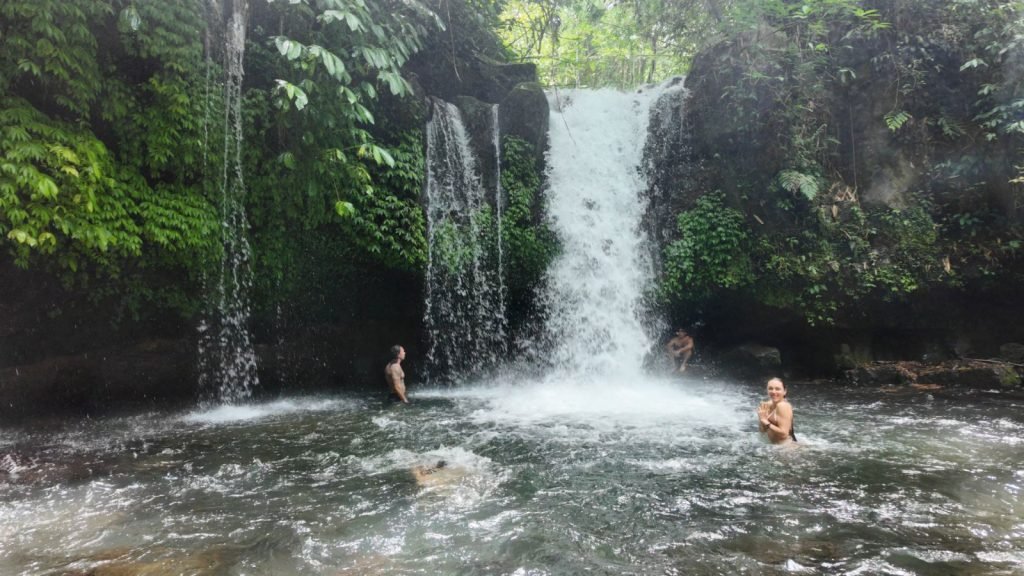
It is not the tallest or most dramatic waterfall in Bali, and that is exactly part of its appeal. Yeh Hoo feels tucked away, local, and quiet. The walk to the waterfall takes you through a lush setting, with rice fields, greenery, and a more intimate atmosphere than many of Bali’s more famous waterfall spots.
Because Cascadia Rad Villa is located close to Yeh Hoo Waterfall, this can be an easy short outing rather than a full-day trip. It works especially well in the morning or as a refreshing stop after exploring the rice terraces.
Visiting Ulun Danu Beratan From Jatiluwih
Another excellent trip from Jatiluwih is Ulun Danu Beratan Temple in Bedugul.
This is one of Bali’s most recognizable temples, set beside Lake Beratan in the cool highlands. The official Ulun Danu Beratan site places the temple at around 1,200 meters above sea level on the shores of Lake Beratan, while Indonesia Travel describes the Bedugul area as cool and mountainous, with the temple standing beside the lake.
From Jatiluwih, the journey to Ulun Danu is much more natural than coming from the southern beach areas. You are already in the highlands, so the drive feels like a continuation of the landscape rather than a long escape from traffic.
A good half-day route could be:
Jatiluwih Rice Terraces in the morning
Coffee or lunch with a view
Ulun Danu Beratan Temple
Optional stop around Bedugul or a nearby lake viewpoint
Return to Jatiluwih before evening
Where to Stay Near Jatiluwih Rice Terraces
If you want the quickest possible visit, you can see Jatiluwih on a day trip. But if you want to feel the place properly, staying nearby is much better.
A stay in Jatiluwih lets you experience the highlands before and after the day visitors arrive. The mornings are quieter, the evenings feel cooler, and the landscape becomes part of your stay rather than just one stop on an itinerary.
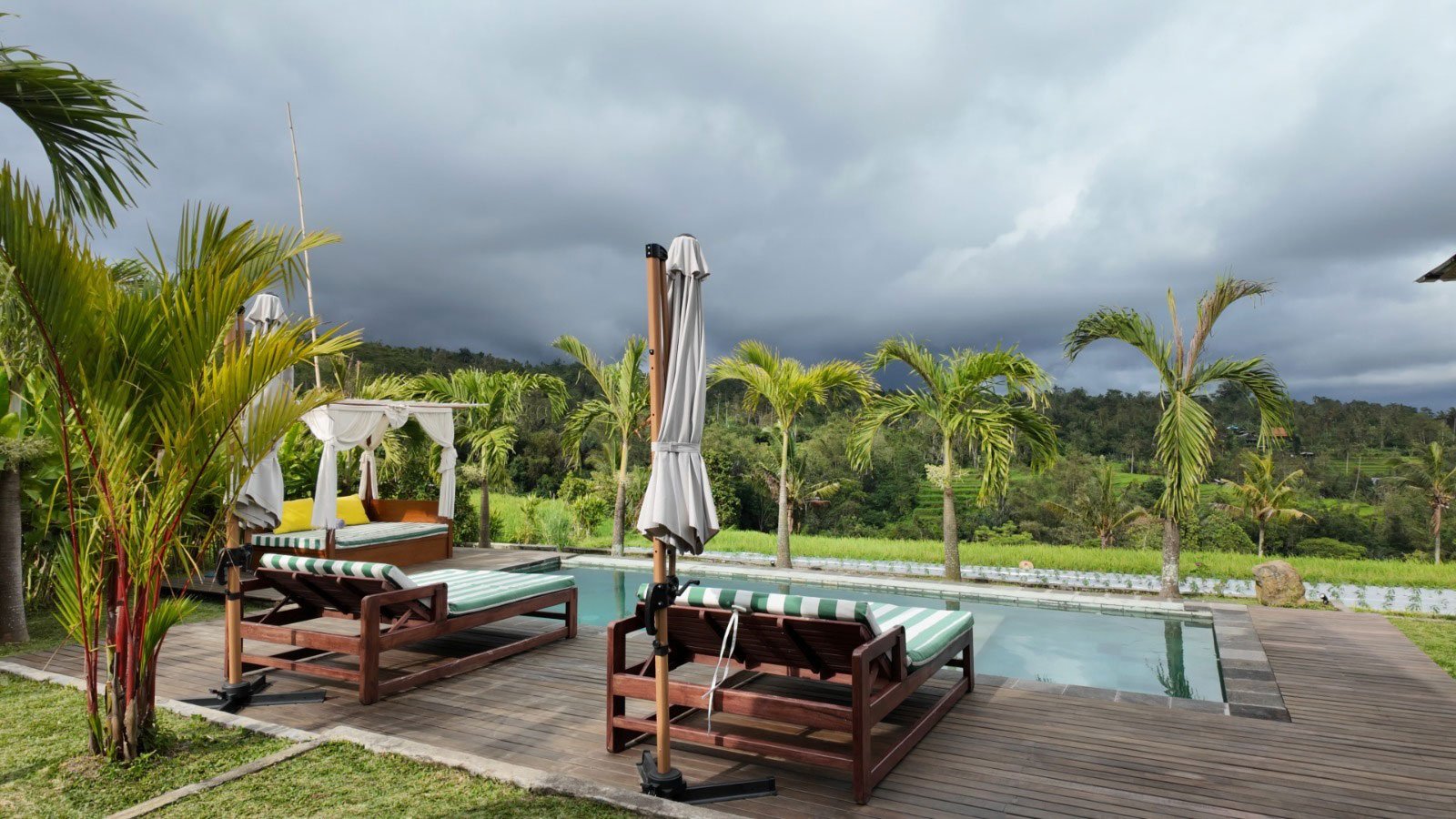
Cascadia Rad Villa is a good fit for travellers who want to stay close to nature without giving up comfort. The villa is listed with features such as a garden, terrace, outdoor pool, restaurant, free WiFi, and mountain views, while the Airbnb listing highlights a wooden villa, pool with rice terrace view, balcony seating, and sunrise over the rice terraces.
This matters because Jatiluwih is not only about what you do during the day. It is also about where you wake up, what you see from your room, and how close you are to the trails, waterfalls, and mountain roads.
Suggested One-Day Jatiluwih Itinerary
Morning
Start with a slow walk through Jatiluwih Rice Terraces. Go early if you want cooler air and softer light.
Late Morning
Stop for coffee or a simple local meal with a rice-field view. Do not rush this part. Jatiluwih is one of those places where sitting still is part of the experience.
Early Afternoon
Visit Yeh Hoo Waterfall. It is close enough to feel easy, and it adds a more hidden, green, refreshing side to the day.
Late Afternoon
Return to the terraces or head back to your villa for pool time and sunset views.
This is a much better rhythm than trying to pack in too many distant stops.
What to Bring
Bring comfortable walking shoes, a refillable water bottle, sunscreen, light rain protection, and cash for entrance fees, parking, small warungs, or local stops.
If you are visiting during the wet season, expect paths to be more slippery. If you are visiting during the hotter hours, bring a hat and do not underestimate the sun, even in the highlands.
A camera is useful, but Jatiluwih is not only a camera place. Leave some time to walk without constantly stopping for photos.
Is Jatiluwih Worth Visiting?
Yes, especially if you want to see a quieter, more spacious, more agricultural side of Bali.
Jatiluwih is not the place for beach clubs, shopping, or nightlife. It is the place for rice fields, mountain air, slow walks, local food, waterfalls, and a deeper sense of Bali’s landscape.
If your Bali trip already includes busy areas like Canggu, Seminyak, Ubud, or Uluwatu, Jatiluwih gives the journey balance. It slows everything down.
And if you stay nearby, it becomes even better. You can see the rice terraces without rushing, visit Yeh Hoo Waterfall easily, and use the area as a base for Bedugul, Ulun Danu Beratan Temple, and the waterfalls of North and Central Bali.
Jatiluwih is not just a viewpoint. It is a place to stay close to the land for a while.
Stay nearby
Stay close to Jatiluwih’s natural highlights.
Cascadia Rad Villa puts rice terraces, waterfalls, quiet roads, and mountain air within easy reach.
Around Jatiluwih